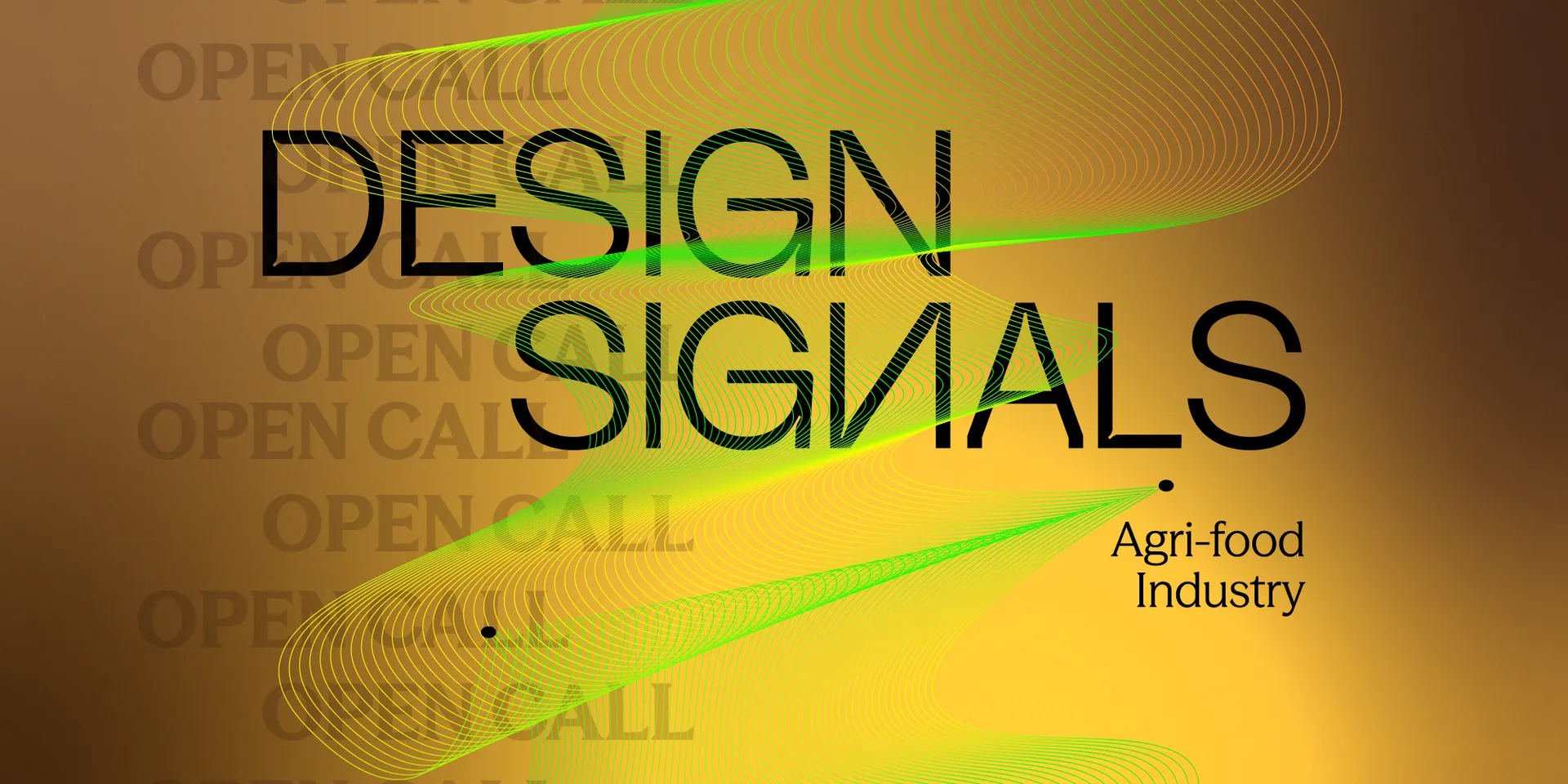
Design Signals is FABER’s program for design research and practice. We invite designers to use diverse media, skills, and languages to uncover hidden narratives and untapped resources within the industrial ecosystems of Timișoara and Romania. Our goal is to question how design can evolve its strategies, practices and visions to actively shape alternative futures.
Following our previous investigations into the automotive (2023), textile (2024), and chemical (2025) sectors, the 2026 edition turns its attention toward a vital pillar of our regional ecosystem:Agri-food Industry.
Design Signals: Agri-food Industry
The agri-food industry is a foundational pillar of everyday life. It shapes our landscapes through fields, factories, and retail networks, while invisibly structuring labor systems, supply chains, and consumption patterns. From soil management and seed technologies to processing, packaging, and distribution, this sector represents a critical framework where technology, policy, ecology, and culture intersect.
In this edition, we invite designers to join FABER’s team of researchers, cultural practitioners and makers to question the status quo of the agri-food industry. We aim to prototype new research methods and design outcomes that address the complexities or urgencies of this field.
About the call
We invite both emerging and established designers, whether applying individually or as collectives, to bring their unique skills and visions to this year’s program. This call is open to a broad spectrum of practitioners—including makers, information designers, coders, social designers, architects, and multimedia, industrial, material, graphic, or bio-designers—who are eager to engage with the agri-food industry at the intersection of technological, manufacturing, ecological, and social systems.
Applicants are encouraged to propose a thematic interest and a design approach rooted in the complexities of the agri-food sector. Design Signals provides the framework, the professional fee, and the platform necessary to develop new work. This is a rare opportunity for designers to translate their vision into a research-based process, expanding their practice through real-world prototyping and deep collaboration with our curator and the FABER exhibition and research team.
The Selection Process
All applicants will be notified via email within a week of the deadline, with shortlisted candidates invited for an interview. Following this round, four participants will be selected by the program’s curator, Martina Muzi.
The chosen designers will spend five months (May—September 2026) evolving their initial proposals into a comprehensive research-based design project. Throughout this period, FABER will facilitate connections and guide collaborations with Timișoara’s local ecosystem, including factories, researchers, and various spaces of production. To support this hands-on engagement, the production process will accommodate the specific needs of each project, including potential residencies or field trips to Timișoara.
Exhibition & Outcomes
The culminating research and final works will be presented to the public as a centerpiece of the design exhibition at FABER in September 2026, as well as in our yearly publication.
Thematic Interest and Approach: Proposal Guidelines
The curator seeks proposals that demonstrate a critical vision of the agri-food industry—viewing it as a systemic, economic, environmental, and political force deeply entangled with global networks of design, infrastructure, and consumption. Whether departing from, crossing through, or concluding in Timișoara, each proposal should establish a clear connection to agri-food processes or the industry at large.
The ambition of the exhibition is to present diverse, research-based projects developed in direct dialogue with the local ecosystem. Consequently, proposals should remain open to engaging with a wide array of agents, places, people, and techniques throughout the project’s duration, utilizing design media that can effectively translate these encounters into meaningful agri-food-related outcomes.
We are looking for proposals that are:
- Experimental and Inventive: Demonstrating a curiosity to explore the intersections of design, contemporary industry, and rigorous research.
- Grounded in Urgency: Based on a specific theme within the agri-food industry and focused on a real-world case that highlights pressing questions or investigative passions.
- Methodologically Clear: Formulated around a distinct approach to both research and applied experimentation, embracing multidisciplinary tools, techniques, and materials.
- Systemically Inspired: Informed by the diverse actors of the industry, including factories, workers, machinery, artifacts, infrastructures, and markets.
While a connection to Timișoara is highly encouraged, it is not mandatory during the initial application phase. Selected designers will have the opportunity to cultivate and deepen this local connection during the five-month development period.
Application Guidelines
Applications must be submitted by completing the form available on this webpage.Within the form, the applicant must submit the proposal as a single, 10-page PDF (maximum 10MB). The file should be named using the format name_surname.pdf
The 10-page PDF should be structured as follows:
- Page 1 | Profile: Include the name(s) of the applicant(s), current location, a short biography (max 200 words), and a link to your website or online portfolio. Additionally, provide a motivation letter (max 400 words) outlining your current practice and why this program is relevant to your professional trajectory.
- Pages 2–3 | Thematic Investigation: Describe your specific interest within the agri-food industry (max 400 words). Support your thematic focus with up to 5 images and relevant context—such as news, artifacts, technologies, places, or phenomena—that ground your interest in real-world reality. Please include sources, citations, maps, or documentation where appropriate.
- Pages 4–5 | Research & Design Approach: Detail your methodology (max 400 words). First, outline the research tools you intend to use to explore your theme; second, describe your design approach, including the techniques, media, and materials specific to your practice. Please also confirm your availability for field research, travel, and exhibition setup during the project phase (May–September 2026) and the exhibition opening phase (September–November 2026).
- Pages 6–9 | Portfolio: Present a selection of your previous work that demonstrates alignment with your proposed research and design approach. Include images, captions, and dates. You may include links to external websites for further context.
- Page 10 | CV: A concise selection of your personal or professional curriculum vitae.
Design Signals is co-funded by:


Organized in partnership with:


Supported by: